






Frequently asked questions
How are the Chisel S codes organized?
They are numbered in release order, not by color family, so two neighboring codes can be a teal and a brown. The chart is a list of shades rather than a color wheel, which means the salon has to reorganize it before it is useful at the chair: swatch every jar in stock at two layers, activated and topped the way a set is actually finished, write the code on the back of each stick, then sort the sticks into families such as nudes, reds, darks, brights, and glitters. A client picks from a display, never from a numeric list.
How many layers does a solid shade need?
Two layers cover most nudes, creams, and dark colors. Brights, neons, and pale pastels usually need three, because high-chroma and very pale pigments reach full opacity slowly and look patchy or translucent at the free edge until the third pass. Glitters and shimmers sit best in two layers over a matching solid, since flake spreads unevenly over bare nail. Keep each layer slightly further from the cuticle than the one before it, which is what gives the edge a thin line that reads as natural nail.
Can one jar serve both the dip station and the acrylic station?
Yes. These are 2-in-1 powders: dipped with bonder, base, and activator with no lamp, or picked up as a bead with EMA monomer on a size 10 to 20 brush and sculpted over a form or tip. Dip suits shorter nails and a fast appointment; the sculpted route is the one for length and for clients who are hard on their hands. Keep a separate jar and brush for each station, because a drop of monomer clumps a dip jar and dip base ruins a bead brush.
What does clearance mean for these shades?
The jar sells at its regular wholesale price until the stock is gone and is not reordered. There is no markdown attached to the tag. What it changes is buying: back up any code already in weekly rotation, because a fill has to use the same code rather than a close match, and choose a replacement shade on a line that is still produced so the Chisel jars get used up rather than rationed.
What is in the Chisel solid collection
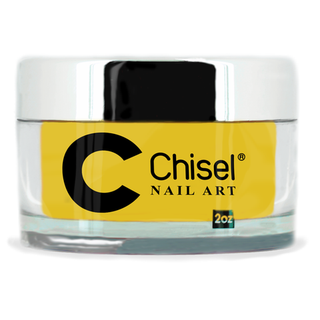
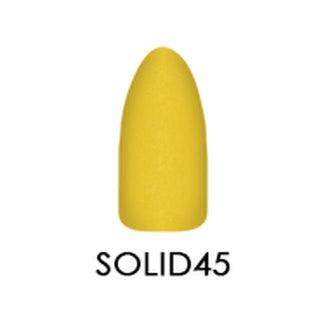
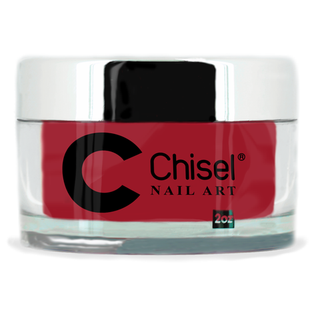
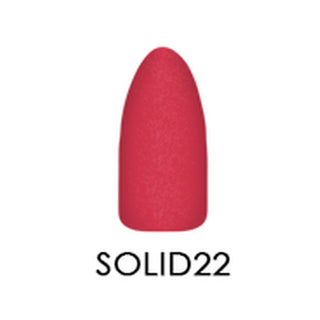
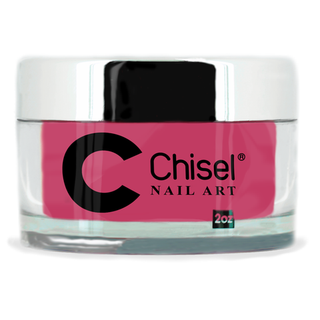
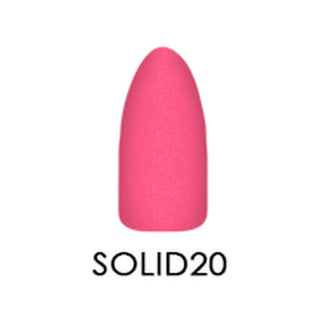
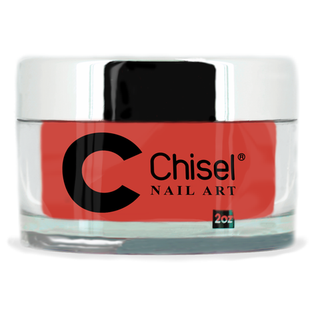
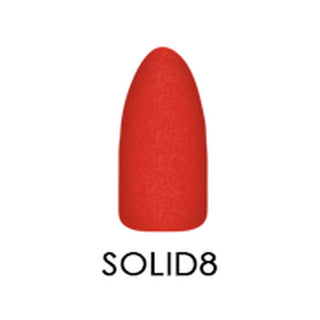
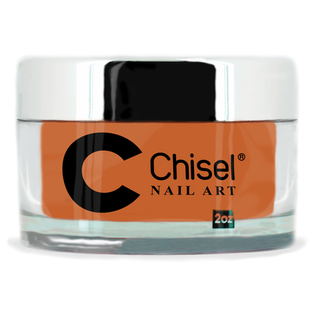
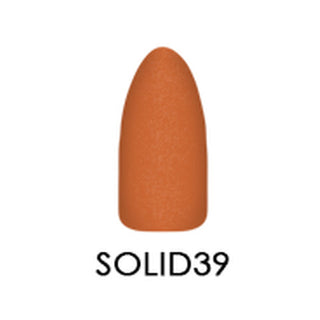
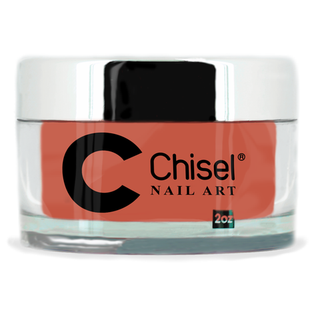
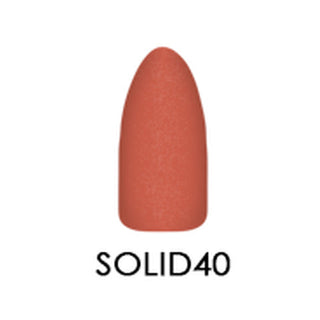
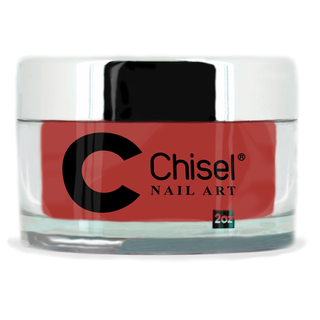
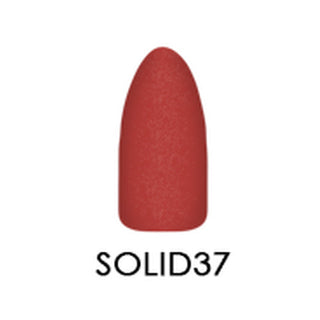
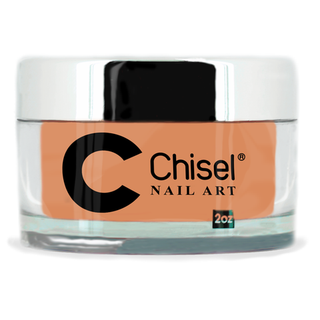
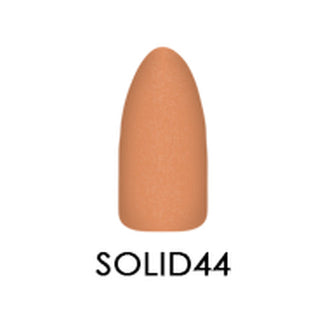
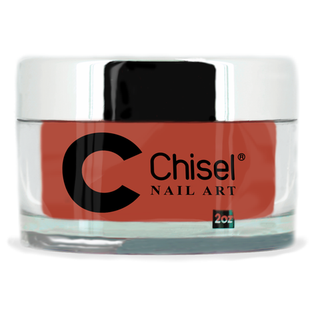
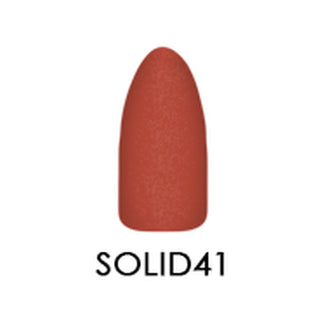
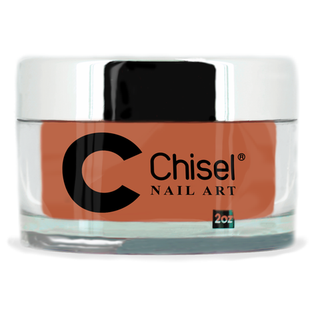
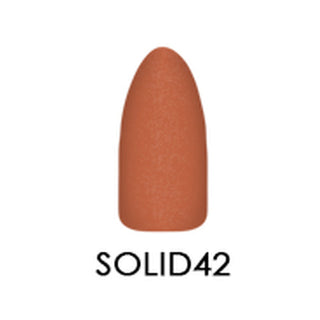
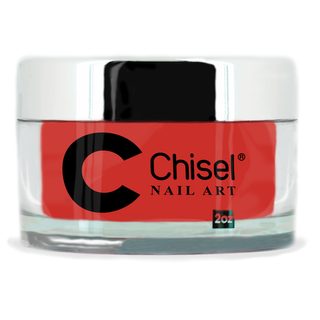
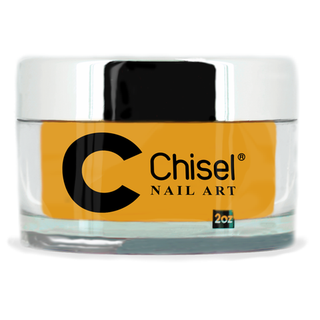
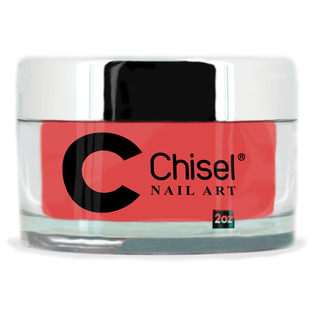
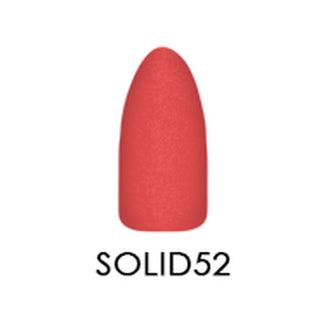
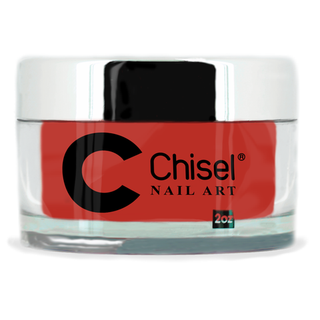
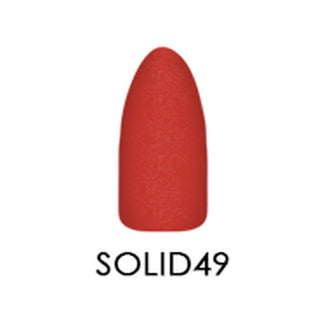
111 jars of Chisel 2-in-1 acrylic and dipping powder in single, full-coverage shades, each one a 2 oz jar at wholesale. The codes all start with S and run in release order rather than by color family, from the low numbers up to S286, so the chart is a list of shades rather than a color wheel. Nineteen of the 111 are out of stock as this page was written. Like the rest of the Chisel range at ND, these jars carry the clearance tag: they sell at their regular wholesale price until the stock is gone and are not reordered.
A solid is the workhorse of a powder station. It covers the whole nail in one color, it is the field a stamped design or a hand-painted detail sits on, and it is the half of a French set that is not white. The ombre pairs get the attention, but a salon empties its solid jars first.
A chart numbered by release, not by family
Because the S numbers follow the order the shades were made rather than the order the eye would put them in, two adjacent codes can be a teal and a brown. That is normal for powder lines and it has one consequence: the chart has to be reorganized by the salon before it is useful at the chair. Nobody picks a color from a numeric list, and a client picking from a display expects to see the nudes together.
- Swatch every jar in stock. One tip or stick per code, two layers, activated and topped the way the salon actually finishes a set, because an unfinished swatch reads a shade lighter.
- Write the code on the back. Not the color name, not the position. The code is the only thing that will still be true after the jar moves.
- Sort into families. Nudes and pinks, reds, dark colors, brights, cool tones, glitters and shimmers. Six trays covers most walls.
- Mark the repeaters. A dot on the stick for the shades used weekly; those are the codes to buy deep from a range in run-out.
- Keep the display where the client sits. A wall the client can reach cuts consultation time and stops the tech from opening four jars to find one shade.
How many layers a shade needs
| Shade type | Typical dip layers | What to watch |
|---|---|---|
| Nude, cover pink, soft cream | Two | Stops short of the cuticle so the regrowth line stays soft |
| Deep and dark colors | Two | Brush the surface clean between layers; dark pigment shows every grain |
| Bright and neon | Three | Reaches full opacity slowly and looks patchy at two layers |
| Pastel and pale | Three | The free edge stays translucent until the third pass |
| Glitter and shimmer | Two over a matching base color | Flake sits unevenly over bare nail; a solid underneath fixes it |
Solid powders on the dip route
- Bonder on the bare, dehydrated plate, then one thin coat of dip base on the whole nail.
- Dip at an angle rather than straight down, so the powder lands evenly instead of packing at the tip.
- Tap the finger hard enough to drop the loose powder back, then dust the surface with a clean dry brush before the next coat.
- Keep every layer after the first a hair further from the cuticle than the one before it, which is what makes the edge thin enough to look like natural nail.
- Activator over the whole nail, a minute to harden, then file the shape, buff, activate again, and top in two thin coats.
- No lamp is needed on this route, which is why dip suits a client who is in the chair on a lunch break.
The same jar on the acrylic route
Picked up as a bead with EMA monomer on a size 10 to 20 brush, a solid Chisel powder sculpts a full color set over a form or a tip. That route is the one for length, for a client who breaks product, and for any nail that needs a built apex, because a sculpted bead is denser than a dipped layer. The ratio is the whole skill: a bead that runs is wet, a bead that drags is dry, and the one that holds its shape while it moves under the brush is right. Work in a cool room, because a warm station sets the bead before it is placed.
A salon that runs both stations keeps two jars of a shade it uses in both services rather than carrying one jar back and forth. A drop of monomer in a dip jar clumps the powder, and a brush that has sat in dip base is finished for beadwork.
Encapsulation and design work
Solid powders are the ground for everything a tech builds inside a nail. Foil, dried flowers, glitter placement, and thin hand-painted lines all sit on a solid layer and get sealed under a clear or a second pass of the same shade, which is what encapsulation means in a powder system: the design is inside the enhancement, not on top of it, so it cannot wear off. Two practical rules. Keep the design layer thin, since anything with height telegraphs through the surface and has to be filed flat. And build the encapsulating layer in two light passes rather than one heavy one, because a thick pass traps air around the design and leaves a cloudy halo.
Stamped designs work the other way around: the pattern is cut into uncured powder with a stamp, so it needs a contrasting solid underneath. A pale cream over a saturated color, or a dark over a nude, reads from a distance. A glitter is the wrong choice for the stamped layer because the flake fills the cut edges.
Which solids a wall actually needs
- Two nudes. One cool, one warm, because a nude that fights a client's skin tone is the shade she will not rebook.
- A cover pink. The base of most natural-look sets and the half of a baby-boomer French that is not white.
- One clean red and one deep red. They do not substitute for each other and both get asked for by name.
- Two dark shades. A black or near-black and one dark of the season, usually a wine, a navy, or a deep green.
- Two brights. Whatever the salon's clients wear in summer, bought in threes because brights go first.
- A shimmer and a glitter. For the accent finger, which is most of the sparkle a salon sells.
Wear, fill, and removal
A dip set in a solid shade is rebooked at two to three weeks and can run to four on a client who does not work with her hands. At the fill, the regrowth area is filed back to a feathered edge and re-dipped in the same code, which is the reason a salon on a range in run-out keeps a second jar of anything it puts on a regular client: the fill needs the shade, not a close match. Removal is the standard powder removal, file through the top layer, soak in acetone with a foil wrap, and push the softened product off rather than prying, since prying takes nail plate with it.
Store the jars closed and out of the sun, pour into a tray instead of dipping a client's finger into the house jar, and sift the unused powder back. Powder that has been left open takes on moisture, and damp powder drags on the brush and sets gritty.
Matching a solid code to a client card
On a range that is not restocked, the code on the client card outlives the jar. The fix is to decide the replacement before the shelf decides it. Lay each Chisel stick beside the nearest shade from a line the salon can still order, write both numbers on the card, and file the pair in code order at the dip station rather than in the office. When the jar runs out the tech opens the replacement without a conversation at the chair, and the client sees the same nail she booked.
One thing not to rely on: matching a powder to a gel or lacquer of the same number across brands. Matching percentages hold inside a line that was formulated together, where the pigment load was built to agree across formats. Between two brands a code is only a code, so a shade that is going to be offered in more than one service should be swatched in every format the salon sells it in.
Wholesale pricing at ND Nails Supply
Every jar in the Chisel solid collection ships at wholesale pricing for everyone, with no business license, no minimum order, and no membership fee. Clearance-tagged shades sell at their regular wholesale price until the stock is gone and are not reordered, so the codes a salon repeats are the ones to back up. Free shipping on orders $100+, and in-stock jars ordered before 2pm PT on weekdays leave the same day.