




Frequently asked questions
What is the difference between the sheer, opaque, and cover CND powders?
A sheer powder is translucent, so the natural nail reads through it and the line where the nail grows out stays soft; it suits clients who come back every three or four weeks. An opaque powder blocks the plate completely, which is what a crisp French smile line needs and what covers a stained or ridged nail, but the grow-out line shows sooner. Cover and natural tones sit between the two: enough pigment to even out the bed, enough translucency to keep the regrowth gentle. The CND names print warm or cool, which shortens the consultation.
Which liquid should be used with CND powder?
A CND sculpting liquid. The product bodies name Retention+, Radical SolarNail, and Moxie, and ND stocks CND Retention Sculpting Liquid in 8 oz, 16 oz, and 32 oz. In acrylic the powder and the liquid work as a pair: set speed, how the bead behaves under the brush, and how clear the cured product stays all depend on the combination rather than on either bottle alone. A tech who changes one half of the pair should expect to relearn the ratio for a set or two.
When is the 32 oz jar worth it over the 3.7 oz?
When the shade goes on most clients. Most salons run through one sheer pink, one natural, and the opaque white behind every French far faster than the rest of the shelf, and those are the jars to buy in the salon size. Everything else stays in the 3.7 oz desk jar. Whichever size is on the shelf, decant into a small working pot and keep the big jar closed, because bulk powder left open takes on moisture and drags on the brush, and use a scoop that has never touched liquid.
How do I pick a cover shade for a client?
Against her hand, in daylight, not against a printed chart and not under the lamp, because salon lighting pulls pink shades warm. Lay a swatch tip flat on the nail bed: the right cover disappears against the bed, a shade that reads pinker than the finger is too cool, and one that reads yellow is too warm. Keep a swatch ring of every cover shade the salon stocks and write the chosen shade on the client card, since the second visit is where consistency is won or lost.
What is in the CND acrylic powder collection
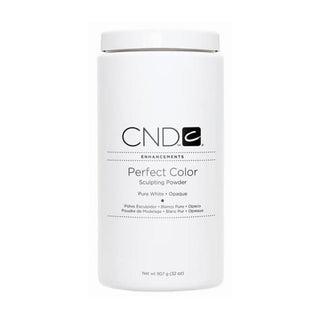
18 listings of CND Perfect Color sculpting powder at wholesale, in the 3.7 oz (104 g) desk jar and the 32 oz salon jar. The shade set is built for natural-looking enhancements rather than for color work: sheer pinks and natural tones that let the nail bed show through, opaque pinks and whites for French work, and a clear. Eight of the eighteen are out of stock as this page was written. CND is a professional line sold through the salon channel rather than direct to consumers, and it runs one acrylic system rather than several, which is why a salon that learns the CND liquid-to-powder ratio tends to stay on it.
The shade families on this page
| Family | Shades listed | What it does on the nail |
|---|---|---|
| Sheer pinks | Pure Pink Sheer, Blush Pink Sheer, Intense Pink Sheer, Natural Sheer | Translucent bed color; the natural nail still reads through, so regrowth is soft |
| Opaque pinks and white | Cool Pink Opaque, Pure White Opaque | Full coverage for a French smile line and for hiding a stained or uneven plate |
| Natural and nude tones | Natural Buff, Light Peachy Pink, Medium Cool Pink, Warm Pink, Warm Medium Brown, Cool Mocha | Cover shades chosen against the client's own skin rather than against a chart |
| Clear | Clear | Over color, over art, and for encapsulating anything laid on the bed |
| Salon jars | Pure White Opaque, Natural Sheer, Pure Pink Sheer, Blush Pink Sheer, Intense Pink Sheer | The 32 oz size for the shades a station uses on most clients |
Sheer, opaque, and cover: what the names mean
The three words decide how a set looks after three weeks, not on the day. A sheer powder lets light through, so the line where the natural nail grows out under it stays soft and a client can go longer between fills without an obvious band. An opaque powder blocks the plate completely, which is what a crisp French smile line needs and what hides a discolored or ridged nail, but the grow-out line is visible sooner because there is a hard edge between product and nail. A cover or natural tone sits between the two: enough pigment to even out the bed, enough translucency to keep the grow-out gentle.
The practical consequence for a salon: sheer and cover shades suit clients on a three to four week cycle, opaque suits clients who rebook every two weeks or who want a graphic French. A tech who understands that stops fighting complaints about the regrowth line.
The liquid these powders are made for
The CND powders are formulated to cross-link with CND sculpting liquids, and the product bodies name Retention+, Radical SolarNail, and Moxie. ND stocks CND Retention Sculpting Liquid in 8 oz, 16 oz, and 32 oz, which is the pairing most salons on this line use. Powder and liquid from the same system matter more in acrylic than in most services: the set speed, the bead consistency, and how clear the finished product stays are all functions of the pair, not of either bottle alone. A tech who swaps one half of the pair should expect to relearn the ratio.
Sculpting a set with CND powder
- Prep. Push back, remove the shine, dust, dehydrate, and prime the plate if the client lifts; keep everything off the skin.
- Form or tip. Fit the form so it sits tight under the free edge with no gap, or blend the tip before any product is placed.
- The first bead. Dip the brush in liquid, wipe one side, touch the powder, and wait the half second it takes for the bead to lose its wet shine before placing it.
- Build the structure. Free edge first on a sculpted nail, then the apex, then a thin bead at the cuticle area; thin at both ends, thickest at the stress point.
- French, if the service calls for it. Opaque white at the free edge, pushed into a smile line with the side of the brush, then the sheer or cover shade over the bed.
- File and finish. Shape the perimeter, refine the apex, buff the surface to one plane, then finish with gel, lacquer, or a shine buff.
Desk jar or salon jar
- 3.7 oz. The working size, and the right one for any shade used a few times a week or for a color a salon is trying out.
- 32 oz. For the two or three shades that go on most clients, usually a sheer pink, a natural, and the opaque white behind every French.
- Decant, do not work from the big jar. Pour into a small pot and keep the salon jar closed, because bulk powder that sits open takes on moisture and drags on the brush.
- Buy the white in the larger size before the colors. A French station empties white faster than anything else on the shelf.
- One scoop, one jar. A scoop that has touched liquid contaminates a whole jar, and on a 32 oz jar that is an expensive mistake.
Choosing a cover shade against real skin
Cover powders are chosen against the client's hand, not against a printed chart or a screen. Lay a swatch tip flat on the nail bed in daylight, not under the lamp, because salon lighting pulls pink shades warm. A shade that disappears against the bed is the right cover; one that reads slightly pinker than the finger is a shade too cool, and one that reads yellow against it is too warm. Keep a swatch ring of every cover shade the salon stocks and write the client's shade on her card, because the second visit is where consistency is won.
The CND naming helps here more than most: warm and cool are printed in the shade names, so a tech who knows the client runs warm can start from Warm Pink or Warm Medium Brown rather than testing the whole ring.
Fills, wear, and removal
A sculpted acrylic set is rebalanced every two to three weeks. At the fill the regrowth area is filed back to a feathered edge, the apex is rebuilt, and the same powder goes back on, which is why a salon keeps a working jar of each shade it puts on regular clients rather than rotating shades between visits. Removal is a soak: file through any topcoat, wrap in acetone-soaked cotton with foil for fifteen to twenty minutes, and push the softened product away gently rather than prying or drilling it off, since both take plate with them.
Two habits protect the set between visits. Cuticle oil daily, which keeps the seal at the cuticle flexible instead of brittle, and gloves for cleaning, because prolonged water and solvent contact under the enhancement is what starts most lifting.
Bubbles, and where they come from
A bubble in a cured bead is almost always a ratio or a handling problem rather than a bad jar. A bead that is too wet carries liquid that has nowhere to go and leaves a void as it sets. A brush flicked or stirred in the dappen dish whips air into the liquid, and that air travels into the bead. Powder scooped from a jar that has been shaken sits loose and traps air between grains, which is why a jar is left to settle after transport. And a bead pressed rather than floated into place drives air under itself instead of letting it escape at the edges.
The fix is boring and reliable: consistent ratio, a brush that is wiped rather than shaken, a settled jar, and a light hand. A tech chasing bubbles by changing brands usually finds them again in the new one.
Where CND sits among the acrylic lines at ND
| Line | Character | Sizes at ND |
|---|---|---|
| CND Perfect Color | Natural-look sheers, opaque French shades, cover tones named warm or cool | 3.7 oz and 32 oz |
| Entity sculpting powder | Corrective pink and white powders in salon buckets | 5 lb |
| Mia Secret | Numbered cover shades with a wide nude range | 1, 2, 4, and 8 oz |
| V Beauty Pure | Clear, cover, and color acrylic for everyday sets | Desk and salon jars |
A salon choosing between them is choosing a habit rather than a formula. CND suits a station that works sheer and keeps clients on a long cycle, and the cover names make the consultation quick.
Wholesale pricing at ND Nails Supply
CND powders ship at wholesale pricing for everyone, with no business license, no minimum order, and no membership fee. Free shipping on orders $75+, and in-stock jars ordered before 2pm PT on weekdays leave the same day.