









Frequently asked questions
How are the Mia Secret powders numbered?
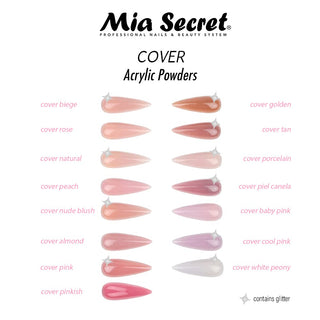
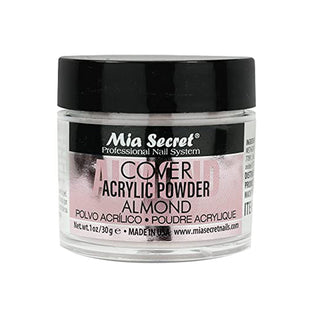
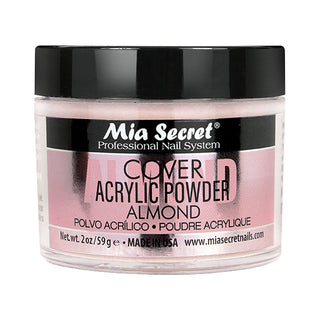
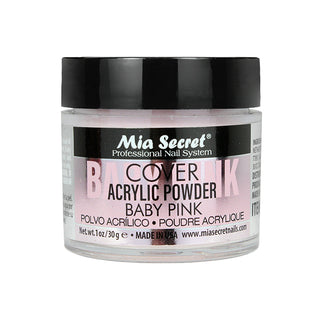
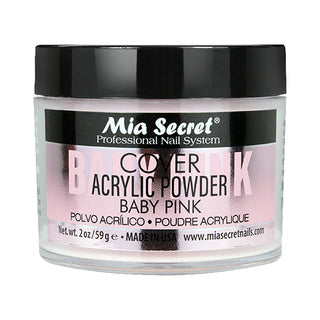
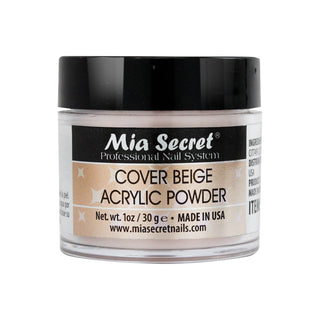
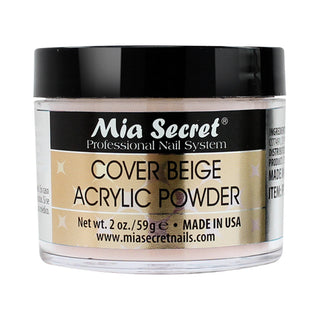
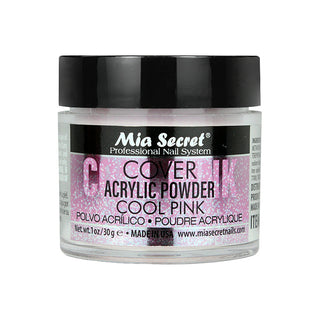
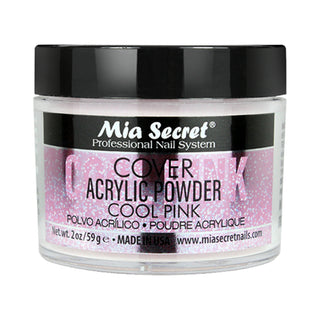
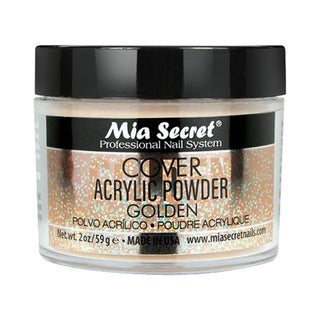
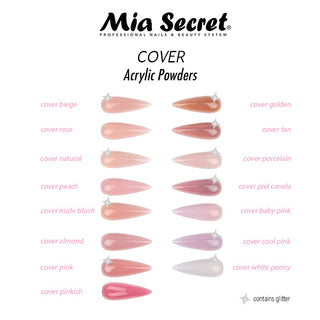
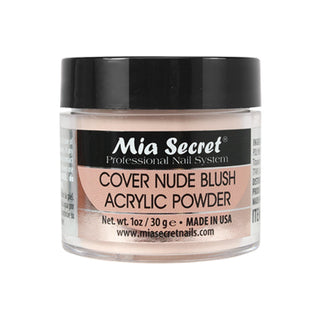
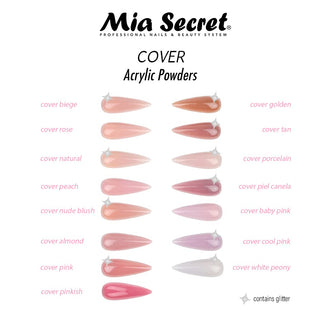
By number and name together, from 00 Clear to 20 White 3D. Numbers 01 to 15 are the cover shades, running from Cover Porcelain and Cover Baby Pink at the pale end through Cover Natural, Cover Beige, Cover Nude Blush, and Cover Peach in the middle to Cover Golden, Cover Tan, and Cover Piel Canela at the deep end, with Cover Almond, Cover Cool Pink, Cover Pink, Cover Pinkish, and Cover Rose filling the tonal gaps. Then 17 Natural Pink and 18 Pink for pink-and-white work, 16 Frosted Stars and 19 Frosted Pink for shimmer, and 20 White 3D.
How many cover shades does a salon actually need?
Three or four, not fifteen. Pick one pale, one mid, and one warm or deep based on the clients already in the appointment book, swatch them on curved tips laid against the nail bed rather than on flat sticks, and write both the number and the name on each client card. After a month the misses cluster in one part of the ladder, and that gap is the next jar to buy. The shade that ends up carrying most appointments is the one to move into a 4 oz or 8 oz size.
Which size should I order?
1 oz for a shade being tested or one used about once a week, 2 oz as the everyday desk jar, 4 oz for the one or two covers that carry the book and for clear on a station that encapsulates a lot of art, and 8 oz for white on a French station or a single cover used daily. Anything above 2 oz should be decanted into a small working pot with the large jar kept closed, since powder that sits open at the table takes on moisture and drags on the brush.
What are White 3D and the frosted powders for?
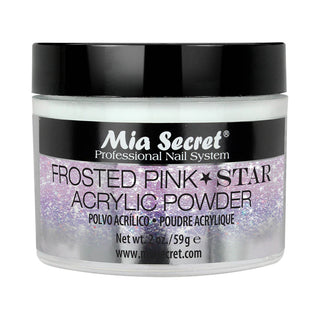
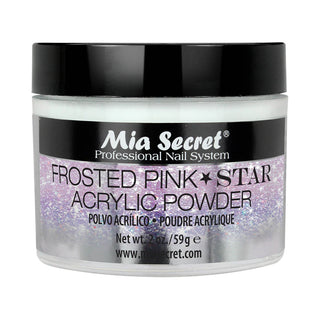
White 3D is the dense opaque white: enough pigment for a smile line that reads across a room, and stiff enough in the bead to hold a shape, which is what sculpted flowers, bows, and raised detail need. Frosted Stars and Frosted Pink carry visible shimmer rather than flat pigment, so they sit best over a solid color base and on an accent nail rather than across all ten. All of these powders can be mixed with each other dry in a separate labeled pot to make a custom cover, never in the client's dappen dish.
What is in the Mia Secret acrylic powder collection
23 listings of Mia Secret professional acrylic powder at wholesale, numbered 00 through 20 and named, so a jar is ordered by number and matched by name. Most shades are listed in 1 oz, 2 oz, and 4 oz, a few run to 8 oz, and one listing is out of stock as this page was written. What makes the range unusual is its middle: fifteen of the twenty-one shades are cover powders, which is a wider nude ladder than most acrylic lines carry, and the reason a salon with a mixed client book tends to land on this line.
The four groups in the numbering
| Group | Shades | Where it is used |
|---|---|---|
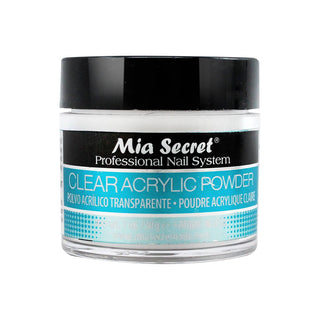
| Clear | 00 Clear | Over color and art, for encapsulation, and as the top layer on a color set |
| Cover shades | 01 Cover Almond, 02 Cover Baby Pink, 03 Cover Beige, 04 Cover Cool Pink, 05 Cover Golden, 06 Cover Natural, 07 Cover Nude Blush, 08 Cover Peach, 09 Cover Piel Canela, 10 Cover Pink, 11 Cover Pinkish, 12 Cover Porcelain, 13 Cover Rose, 14 Cover Tan, 15 Cover White Peony | The bed of a natural-look set, matched to the client's own skin |
| Pinks and naturals | 17 Natural Pink, 18 Pink | Classic pink-and-white work where the bed reads pink rather than nude |
| White and effect | 20 White 3D, 16 Frosted Stars, 19 Frosted Pink | French smile lines, 3D and sculpted art, and a shimmer finish on an accent |
Why fifteen cover shades matter
A cover powder is meant to disappear against the nail bed. One nude cannot do that across a client book that includes porcelain, olive, golden, and deep skin tones, which is why a line that carries only two or three covers forces a tech to compromise on half her clients. The Mia Secret ladder runs from Cover Porcelain and Cover Baby Pink at the pale end, through Cover Natural, Cover Beige, Cover Nude Blush, and Cover Peach in the middle, to Cover Golden, Cover Tan, and Cover Piel Canela at the warm and deep end, with Cover Cool Pink, Cover Pink, Cover Pinkish, Cover Rose, and Cover Almond filling the tonal gaps between them.
Two notes that save a salon money. A cover shade is judged on the bed, not in the jar, because powder in a jar always reads lighter than the cured product. And the difference between neighbors on the ladder is small on purpose; a salon does not need all fifteen to serve everyone, it needs three or four that bracket its own client book.
Building a cover ladder from a client book
- Start with three. One pale, one mid, one warm or deep, chosen from the clients already in the appointment book rather than from the chart.
- Swatch on tips, not on sticks. A curved tip laid on the bed shows what the shade does over a real nail; a flat stick does not.
- Record the number on the card. The number is what gets reordered and the name is what the client remembers, so write both.
- Add a fourth for the gap that keeps appearing. After a month the misses cluster in one part of the ladder; that is the next jar.
- Buy the workhorse bigger. When one shade covers most appointments, move it to the 4 oz or 8 oz size and leave the rest at 1 oz or 2 oz.
Which size to buy
- 1 oz. A trial size for a shade the salon is testing, and the right size for the far ends of the cover ladder that get used once a week.
- 2 oz. The everyday desk jar for a shade in regular rotation.
- 4 oz. The working size for the one or two covers that carry the book, and for clear on a station that encapsulates a lot of art.
- 8 oz. The salon size, worth it for white on a French station or for a single cover that goes on daily.
- Decant from anything above 2 oz and keep the large jar closed, since powder that sits open at the table takes on moisture.
White 3D and the frosted powders
White 3D is the opaque white of the range: dense pigment for a smile line that has to read from a distance, and stiff enough in the bead to hold a shape, which is what 3D work needs. It is the powder for sculpted flowers, bows, and raised detail, because a bead that slumps loses the form before it sets. Frosted Stars and Frosted Pink carry visible shimmer instead of flat pigment, and they behave like any effect powder: they read best over a solid base coat of color rather than straight on the bed, and they belong on an accent nail or a tip rather than across all ten.
The bodies note these powders can be mixed with each other freely, which is how a tech gets a custom cover: a scoop of a pale cover with a touch of a warm one, mixed dry in a separate pot and labeled, never mixed in the client's dappen dish.
Working with the powder
These are acrylic powders, so they are picked up as a bead with liquid monomer on a brush and set by reaction rather than by lamp. The ratio decides everything: a bead that runs off the brush is wet and will shrink, lift, and cloud; a bead that drags and leaves brush marks is dry and will be brittle and bubble. The bead that holds a dome while it still moves under the brush is the one to place. Wipe the brush against the side of the dish rather than stirring it, since stirring whips air into the liquid and the air ends up in the nail.
Prep is the other half. Push back, break the shine, dust, dehydrate, then prime if the client lifts, and keep every product off the skin. Most lifting a salon blames on a powder started before the first bead was placed.
Clear as an encapsulation layer
Clear is the quiet workhorse of a color range. Foil, dried flowers, glitter placement, and painted detail all go on a set bed and are then covered with a thin clear layer so the design sits inside the enhancement rather than on top of it, where it would wear off in a week. Build the clear in two light passes rather than one heavy one, because a thick pass traps air around the design and leaves a cloudy halo, and keep the design layer itself flat since anything with height has to be filed level afterwards.
Cover-shade mistakes that cost rebookings
- Choosing from the jar. Loose powder reads lighter and flatter than the cured bead. Judge from a swatched tip only.
- Choosing under the lamp. Salon lighting warms everything. Take the hand to the window for the ten seconds the decision needs.
- One cover for the whole book. A shade that flatters a porcelain hand goes grey on an olive one, which the client reads as a bad set rather than a wrong shade.
- Forgetting to write it down. A cover chosen well and then lost by the next visit is a consultation paid for twice.
- Building too thick. A cover hides the bed at a normal thickness; stacking product to hide a stain makes the nail look heavy instead.
Jar and brush care
Powder is ruined by moisture and by contamination, in that order. Keep the lid on between beads rather than between clients, store the jars upright and away from the acetone shelf and direct sun, and never return powder that has been in a dappen dish or touched by a wet brush to the jar. Use a dry scoop for decanting and keep it with the jar rather than in a drawer with the liquids.
Brushes last a year with care and a month without it. Wipe the brush on a lint-free towel at the end of a nail, clean it in monomer rather than acetone, since acetone strips the natural hair, shape the head with the fingers, and lay it flat or hang it bristles down so liquid does not run into the ferrule and loosen the glue.
Wholesale pricing at ND Nails Supply
Mia Secret powders ship at wholesale pricing for everyone, with no business license, no minimum order, and no membership fee. Free shipping on orders $100+, and in-stock jars ordered before 2pm PT on weekdays leave the same day.