
Frequently asked questions
Is the Mia Secret liquid monomer an EMA monomer?
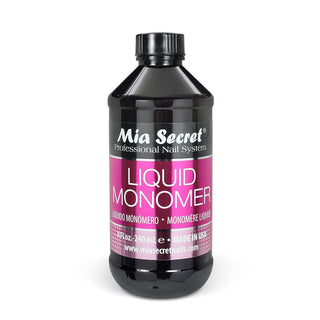
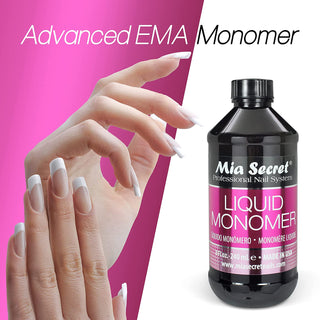
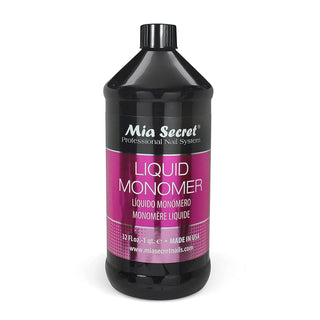
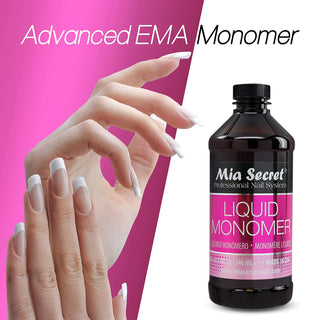
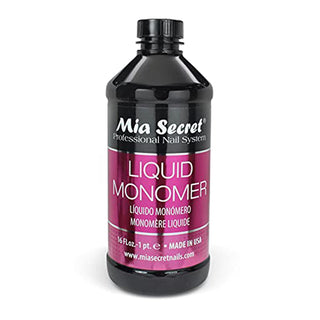
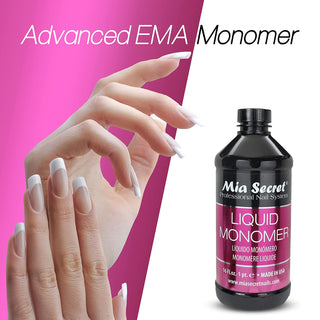
Yes. The Mia Secret Liquid Monomer stocked at ND is an EMA monomer, ethyl methacrylate, and it is not MMA; the listings state it and the brand can supply the safety data sheet for anyone who needs the full composition in writing. The bottle front carries the brand, the product name, the size, and Made in USA rather than the chemistry, which is why the question comes up so often. EMA is what professional acrylic systems in the United States are built on, because it gives a bead workable time and lets the enhancement be soaked off in acetone instead of filed away.
What is the difference between Nail Prep and Xtrabond?
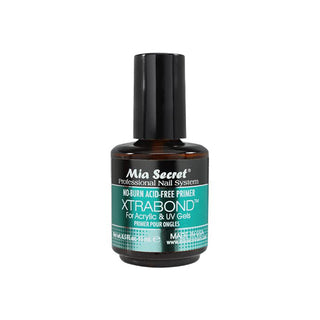
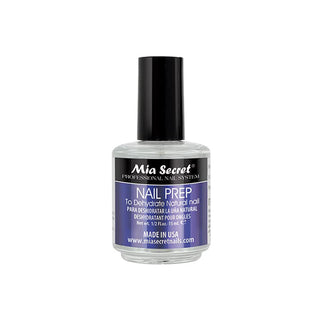
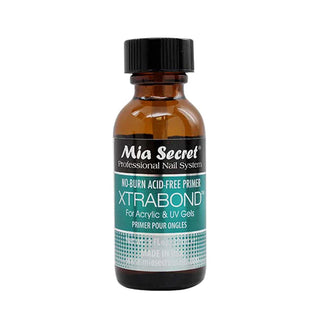
Nail Prep is a dehydrator: it removes surface moisture and oil from the plate after buffing so nothing bonds to a damp surface. Xtrabond is a primer, described by the brand as acid-free and no-burn, which gives the product a bondable surface rather than etching the plate the way older acid primers did. They are used in that order, prep first and primer second, and both go on the plate only. Primer that wicks onto skin is wasted and starts the lifting it was meant to prevent.
Why does my acrylic still lift after priming?
Primer is rarely the cause. The usual list, in order: product touching the skin at the cuticle or sidewall, shine left on the plate because the buff missed the edges, oil reintroduced by handling the nail after prep, a bead placed too wet so it shrank as it cured, and a client who works in water without gloves. Work through that list before changing bottles, and remember that most lifting is decided in the four minutes before the first bead is placed.
Which monomer size should a salon buy?
The size the salon will finish within a few months rather than the largest available, since an opened bottle does not improve with age. The 8 oz suits a single station or a tech building a book, 16 oz a busy table, and 32 oz a salon running acrylic all day across several stations. Keep the bottle capped between clients, pour only what a set needs into the dappen dish, never pour liquid back into the bottle, and work at a table with airflow or extraction.
What is listed on this page
Six Mia Secret listings at wholesale covering the liquid side of an acrylic station: the Mia Secret Liquid Monomer in 8 oz, 16 oz, and 32 oz, Xtrabond primer in 0.5 oz and 1 oz, and Nail Prep in 0.5 oz. Two of the six are out of stock as this page was written. Together they are what turns a jar of acrylic powder into a set: the prep takes the plate back to a clean, dry surface, the primer gives the product something to hold, and the monomer carries the powder into a bead.
The three products and what each one does
| Product | Sizes at ND | Job on the nail |
|---|---|---|
| Nail Prep | 0.5 oz | Dehydrates the plate after buffing so nothing bonds to oil or moisture |
| Xtrabond | 0.5 oz and 1 oz | Acid-free, no-burn primer that improves adhesion for acrylic, gel, and polish, per the product description |
| Liquid Monomer | 8 oz, 16 oz, 32 oz | Picks up the powder as a bead and sets it by reaction, no lamp |
The order they go on
- Push back and clean the plate. Cuticle pushed back, non-living tissue removed from the plate, surface dust taken off.
- Break the shine. A light buff over the whole plate, edge to edge, so the surface is matte but not thinned.
- Nail Prep. Wiped across the bare plate after buffing, never before, since buffing releases the oil the prep is there to remove.
- Xtrabond. A thin pass on the plate only, and only where product will sit. Primer on skin is wasted and lifts the edge.
- Bead. Monomer on the brush, wiped once against the dish, into the powder, then placed the moment the wet shine goes off the bead.
Is the Mia Secret monomer an EMA monomer?
Yes. The Mia Secret Liquid Monomer stocked at ND is an EMA monomer, ethyl methacrylate, and it is not MMA. The bottle front carries the brand, the product name, the size, and Made in USA rather than the chemistry, which is why the question comes up so often, and the listings now say it in plain words. Anyone who needs it in writing for an inspection or an insurer can ask the brand for the safety data sheet, which lists the full composition.
The distinction matters. EMA is what professional acrylic systems in the United States are formulated on: it gives a bead the working time a tech needs and lets the finished enhancement be soaked off in acetone. Methyl methacrylate is not used in professional nail services because it cures far harder than the natural nail, resists removal, and takes plate with it when it separates. A salon buying any monomer should be able to see EMA stated by the brand, and should treat an unusually harsh smell, an unusually low price, or a refusal to provide a data sheet as reasons to look elsewhere.
Acid-free primer, and when a set still lifts
Xtrabond is described as an acid-free, no-burn primer, which is the type most salons use today: it works by giving the product a bondable surface rather than by etching the plate, so it does not sting a client with thin nails or damaged sidewalls. Acid-free primer is more forgiving and slightly less aggressive than the older methacrylic acid primers, and for most natural nails that trade is worth making.
When a set lifts anyway, the primer is rarely the cause. In order of frequency: product touching skin at the cuticle or sidewall, shine left on the plate, oil reintroduced by handling the nail after prep, a bead that was too wet, or a client who works with her hands in water without gloves. Work through that list before changing a bottle.
Ratio and bead control
- Wipe, do not stir. A brush stirred in the dish whips air into the liquid and the air ends up as bubbles in the nail.
- Watch the shine, not the clock. A bead is ready to place when the surface loses its wet look, which is faster in a warm room and slower in a cold one.
- Wet beads shrink. Too much liquid means cloudiness, lifting at the edges, and a set that pulls away from the cuticle.
- Dry beads drag. Too little means brush marks, a brittle set, and bubbles under the surface.
- Pour only what the set needs. Monomer in a dappen dish is never returned to the bottle.
Storage, ventilation, and handling
- Keep the cap on the bottle between clients and the lid on the dappen dish between nails.
- Work at a table with airflow or extraction; monomer vapor is the reason a nail station needs ventilation more than a polish table does.
- Store bottles upright, out of direct sun, away from heat, and in a cupboard rather than on a window sill.
- Empty and wipe the dappen dish at the end of the day rather than leaving liquid in it overnight.
- Buy the size the salon will use within a few months rather than the largest one available, since an opened bottle does not improve with age.
Matching the monomer to the powder
Liquid and powder behave as a pair. A monomer with a medium set time gives a new tech room to place and shape a bead, while a faster liquid suits a high-volume table where the tech already knows the ratio by feel. Room temperature shifts both: a warm station sets a bead before it can be worked, a cold one leaves it moving longer than expected. The practical approach is to keep one liquid across the salon so every tech learns one timing, and to change the powder rather than the liquid when a set needs to behave differently.
Wholesale pricing at ND Nails Supply
Mia Secret liquids and preps ship at wholesale pricing for everyone, with no business license, no minimum order, and no membership fee. Free shipping on orders $100+, and in-stock bottles ordered before 2pm PT on weekdays leave the same day.